
Farm businesses are dealing with a familiar set of pressures: rising input costs, unpredictable weather, volatile prices and the move away from the old subsidy system. None of these are within your control, and many farms are working harder than ever for less certain returns.
For the next generation stepping into farming, those pressures can feel even sharper. That’s one of the reasons we’re proud to partner with the National Federation of Young Farmers’ Clubs, supporting the young people who will shape the future of British agriculture.
Why Diversification Is on the Table
That’s why more farms are looking at diversification. For most, it’s a way of strengthening the core farm business rather than replacing it. A second income can even out the weaker years, make better use of land and buildings you already have, and support long-term plans, including making the farm a viable business to pass on to the next generation.
This blog walks you through what diversification can look like, the questions worth asking before you commit, and how to think about paying for it.
What Diversification Actually Looks Like
If you’re thinking about it, you’re in good company. Diversification has become a normal part of farming, and more and more farms now earn at least some of their income from it. At the same time, direct support payments are being increasingly phased out, and the income once provided has to come from somewhere.
Diversification rarely means a dramatic reinvention. The most common moves build on what’s already in the yard.
- Letting buildings: One of the most common options, whether that’s storage, workshops, offices or small business units.
- Renewable energy: Solar is increasingly popular, alongside wind, biomass and anaerobic digestion.
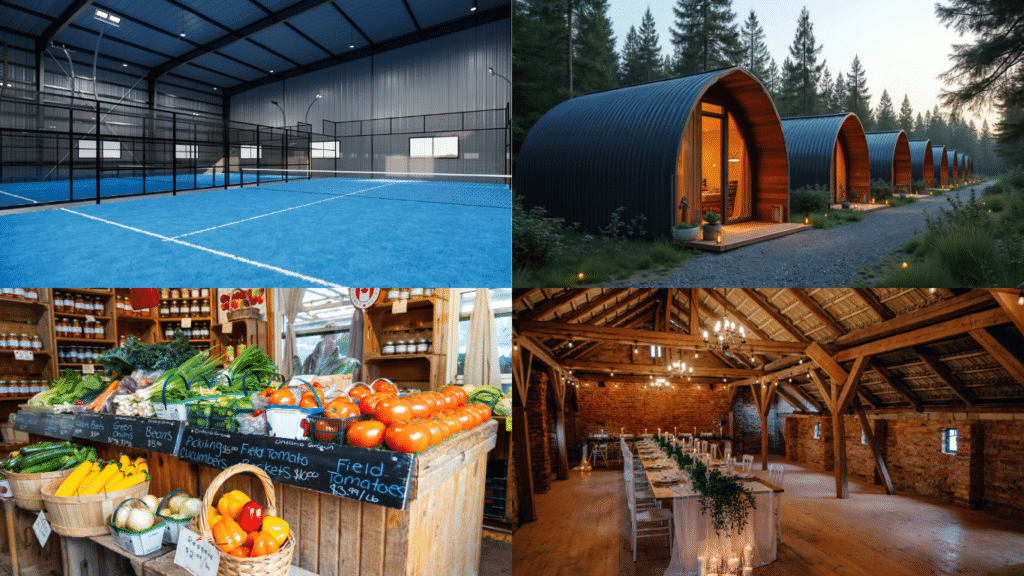
- Tourism and hospitality: Glamping pods, shepherd’s huts, holiday lets, wedding barns and campsites.
- Selling direct: Farm shops, vending machines, butchery, vegetable boxes, ice cream or milk on tap.
- Leisure and experiences: Dog walking fields, padel courts, fishing lakes, pick-your-own, farm parks and school visits.
- Seasonal experiences: Halloween scare mazes, pumpkin picking, Christmas grotto’s.
The best ideas usually come from looking around and asking what you’ve got that someone else would pay for: a redundant barn, a good roadside location, a scenic view or spare machinery.
Often the spark and new ideas come from the younger generation. Through our work with NFYFC and with the wider farming sector, we regularly see the next generation bringing fresh ideas home to the family farm, from social media savvy farm shops and cafes to event spaces that open up a whole new customer base. Diversification can also give a son, daughter or new entrant a project of their own, and a clear role in the business’s future.
Before You Start: Questions Worth Asking
Taking on something new when you’re already stretched is a big decision, and not every good idea is a good fit for your farm. Some upfront planning can save a lot of time and money later.
Is there real demand?
Who are your customers? How will they find you? Look at what there is already nearby.
Who’s going to run it?
Diversifications often take more time than expected. Farming already takes up long days, so be realistic about whether the extra work falls on you, your family or someone you’d need to employ, especially during busy seasons. For many families, this can be the perfect opportunity for a younger family member to step up and take ownership.
What permissions do you need?
Planning, change of use, licensing, food hygiene, insurance and tenancy agreements can all come into play, so make sure to speak to relevant people early.
How does it fit with the rest of the business?
The best diversification works with the farm, not against it. Think about accessibility, noise and how visitors could share the space with livestock and machinery.
Funding Your Project
Most diversification projects need money up front, whether that’s converting a building, installing solar panels or buying glamping pods. Grants can help, but they’re competitive and often paid only once the work is done. Using savings is another route, but it can leave the main farm business stretched if a season doesn’t go to plan.
That’s why many farmers choose finance. Spreading the cost means the new venture can start paying for itself as it earns, while your cash stays in the farm business where it’s needed. For younger farmers and new entrants without years of savings behind them, finance can be the step that turns a good idea into a working business.
Backing the Next Generation
The next generation is central to the future of diversification, which is why our partnership with NFYFC matters to us. Young Farmers are the people who will decide what their farms look like in the years ahead. For many, diversification will be part of that.
Young Farmers’ Clubs already give members the skills, confidence and network to try new things. Through the partnership, we want to add practical support on the financial side: helping members understand their options, plan projects realistically and turn ideas like the ones in this blog into something that works for their farm.
How Moorgate Finance Can Help
Many of our agricultural team at Moorgate come from farming backgrounds, so we understand seasonal income, the value of farm assets and how a farm business really works. Working with a panel of lenders, we find funding that fits your plans, whether that’s a diversification project or the wider running of the farm. Options include:
- Diversification project funding for farm shops, holiday lets, glamping, processing and more.
- Machinery and equipment finance for new, used or refinanced kit through hire purchase or leasing, from glamping pods and vending machines to the equipment that runs the farm.
- Land and infrastructure funding for buying land or for sheds, storage, housing and site upgrades.
- Working capital to cover costs like inputs, rent and wages while a new venture finds its feet.
- Seasonal bridging that works around harvest, breaks in sales and payment schedules.
- Livestock finance to build or expand your herd or flock, with funding designed around livestock.
We also offer a free Business Health Check. Our agricultural specialists review your existing finance and cash flow, look for savings and check you’re getting good value, which can be a useful starting point before planning anything new, and a great first step for younger farmers getting to grips with the family business’s finances.
If you’re weighing up an idea and want to talk through how you might fund it, the team at Moorgate Finance is always happy to have an informal chat, with no obligation either way.
Call us on 01223 380451 or Apply Now to start the conversation.