
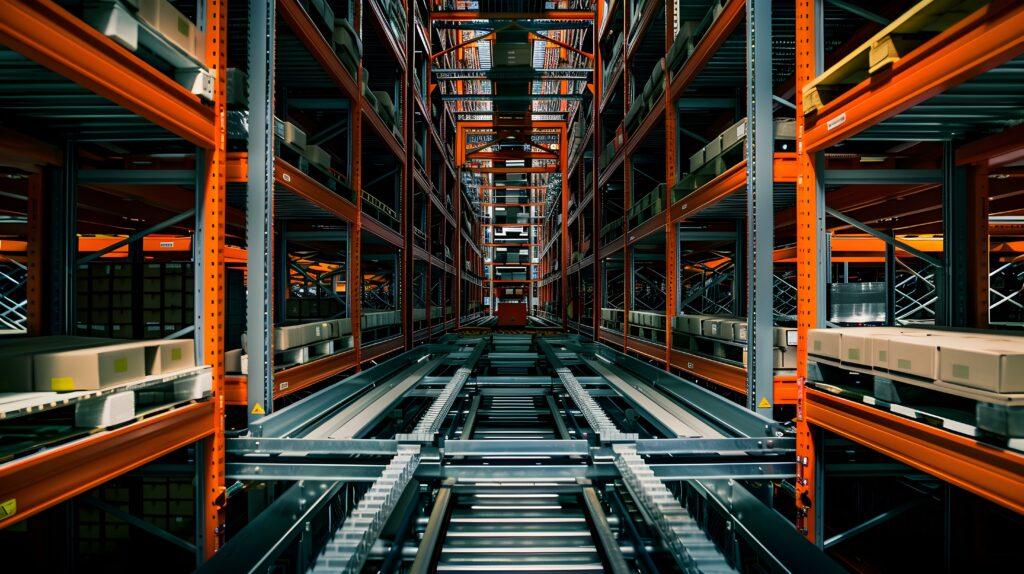
The world of warehousing finds itself at a seismic shift, driven by the rapid advancement of technology, evolving consumer expectations and the rise of e-commerce. In this dynamic environment, businesses need to stay ahead by embracing upcoming trends and taking on the innovations of the future. As businesses strive for greater efficiency, flexibility, and scalability, the future is becoming more sophisticated, automated, and data driven. We’ve looked into the trends shaping the future of warehousing:
Automation With Robotics
Bringing robotics into warehouses is nothing new, however they are increasingly becoming more advanced. Some examples of how warehouses will use robotics:
- Automated Storage and Retrieval Systems
- An automation system designed to buffer, store and retrieve inventory on demand.
- Cobots
- Robots that work collaboratively with humans to assist them with tasks and improve efficiency.
- Autonomous Mobile Robots
- Robots that are used for order picking, sorting, replenishment, and transporting goods from one location to another
- Automated guided vehicles
- Driverless vehicles that operate without the need for a driver, transporting goods and materials precisely and efficiently
On Demand Warehouses
In today’s dynamic and ever-changing environment, on demand warehousing has become an increasingly popular solution. It allows businesses to access warehouse and fulfilment spaces as and when they need them, providing high levels of flexibility and cost efficiency. They are particularly beneficial for e-commerce businesses and those with fluctuating inventory needs, such as seasonal fluctuations or unexpected changes in demand. Some benefits of using an on-demand warehouse include:
- They allow businesses to provide faster shipping and fulfilment for customers as they are able to adapt promptly to fluctuating demand and offer expedited shipping options.
- They provide a significant reduction in fixed operating costs. Traditional warehousing often requires long term leases and significant investment in equipment, maintenance and labour, whereas on demand allows business to pay only for the space and services they need at any given time
- They can also increase resilience for your supply chain and allow businesses to respond proactively and quickly to unforeseen challenges
Drones
Drones are likely to be a key warehouse feature in the future, especially in inventory management. Warehouse drones are a new type of robot technology as they are able to fly without a GPS signal. They are usually tasked with remote sensing operations, in particular stock management and data collection.
Most warehouses need to carry out an inventory count two to four times per year, which requires a lot of work and a high cost. Some companies also perform cyclical counting, where a small sample of inventory is counted instead of all of the inventory. Drones can be used to accurately replace these counts, with drones recording and relaying RFID tags to compare to internal virtual inventory records. Drones lead to improved inventory accuracy, reduced labour costs and increased safety.
Warehouses are a crucial link in the supply chain and will continue to be a key part of the logistics process. At Moorgate Finance we can help you to fund your warehouse improvements allowing your business to benefit from supply chain visibility, greater cost savings, and enhanced efficiency in the future.
Give us a call on 01908 92 62 62 or head to www.moorgatefinance.com/apply-now to start the conversation.